
For decades, the United States shaped the narrative of global trade, building supply chains that ran through its ports, partners, and platforms.
But that center of gravity is shifting. Logistics innovation once centered on optimizing physical movement—faster routes, cheaper carriers, and more responsive distribution. Third-party logistics (3PL) providers became essential partners in this evolution, adding value through warehousing, freight brokerage, and fulfillment. But in today’s increasingly fragmented trade landscape, that model is showing its limits.
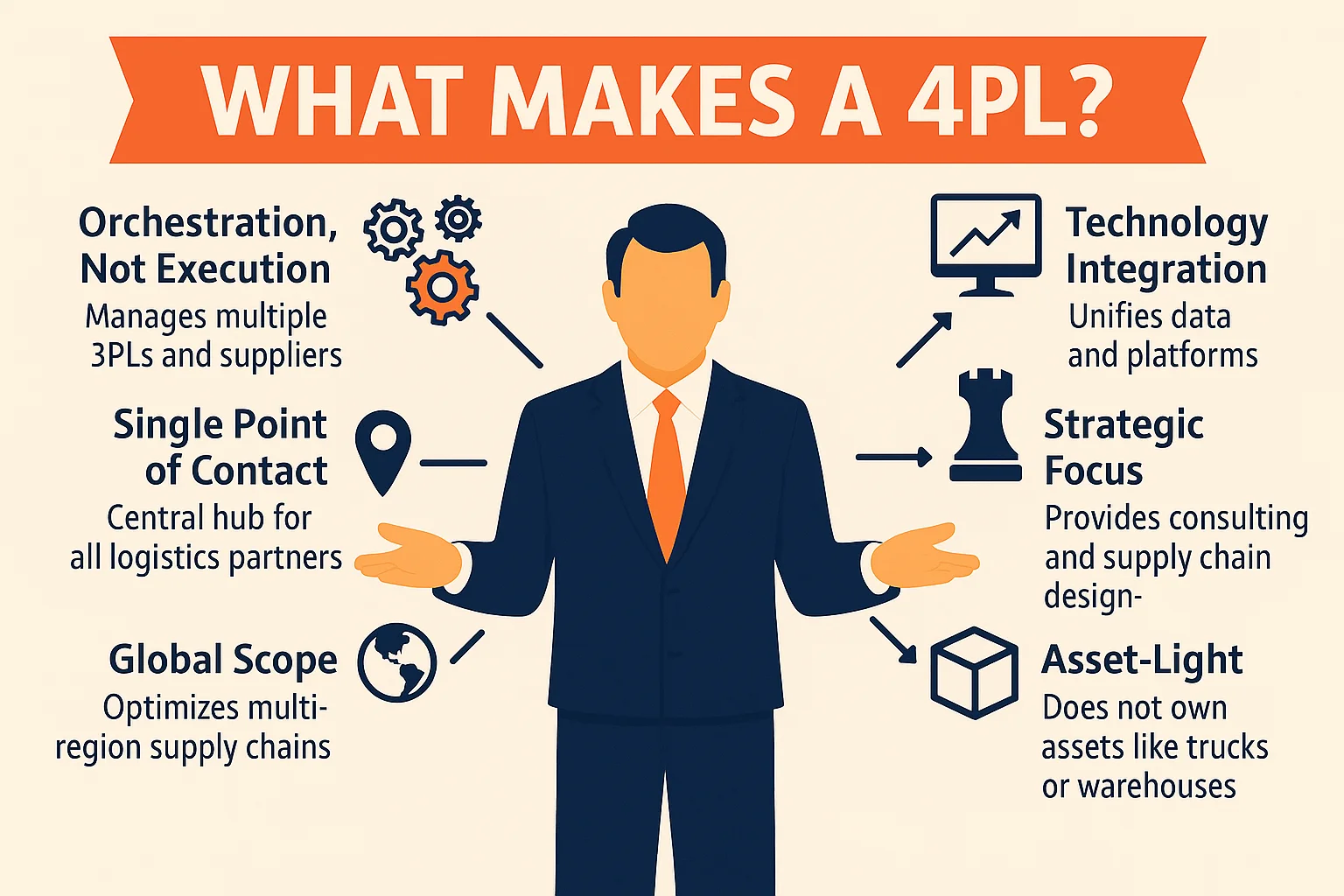
As tariffs tighten margins and supply chains reroute around geopolitical risk, cost savings are no longer found in bulk shipping or labor arbitrage alone. Companies need visibility, flexibility, and orchestration—and that’s where 4PL steps in. By coordinating multiple 3PLs, integrating data across platforms, and optimizing entire logistics networks, 4PL providers are helping businesses offset rising costs and remain competitive in volatile markets.
In the new trade era, logistics isn’t just a service—it’s a strategy.
Tariff Volatility Raises the Value of Orchestration
The 2025-2026 trade environment has made one lesson clear: landed cost is no longer stable enough to manage with static routing plans and annual carrier reviews. Tariff changes, customs scrutiny, export controls, port congestion, supplier documentation requirements, and sudden rerouting decisions can reshape margins before goods reach the dock.
This is where 4PL becomes more than a logistics upgrade. A 4PL model gives companies a control layer for scenario planning: comparing supplier countries, modeling duty exposure, coordinating documentation, shifting freight modes, and identifying when a lower unit price creates a higher total risk. In a tariff-sensitive market, the winning supply chain is not always the cheapest one. It is the one that can see change early and respond without losing control.
“You don’t beat disruption with faster shipping. You beat it with better orchestration. That’s the promise of 4PL.”
A New Supply Chain Blueprint
The post-pandemic world didn’t just expose supply chain vulnerabilities—it accelerated a global realignment. Nearshoring, friend-shoring, and multi-regional sourcing strategies have rapidly replaced decades of reliance on single-source manufacturing. Trade routes are being reimagined, with new corridors linking Mexico, Southeast Asia, Eastern Europe, and Africa to replace legacy pipelines through China and U.S. West Coast ports.
At the heart of this transformation is complexity. Companies managing dozens of suppliers across five or more countries can no longer rely on standalone logistics partners to make it work. They need end-to-end command centers—and that’s what 4PL delivers.
Unlike traditional 3PLs, which operate individual legs of the supply chain, 4PL providers coordinate the entire journey: from supplier onboarding to freight optimization, customs compliance, warehousing, and last-mile delivery. They leverage integrated systems and predictive analytics to streamline decision-making, cut delays, and identify cost-saving alternatives—especially critical in tariff-heavy environments.
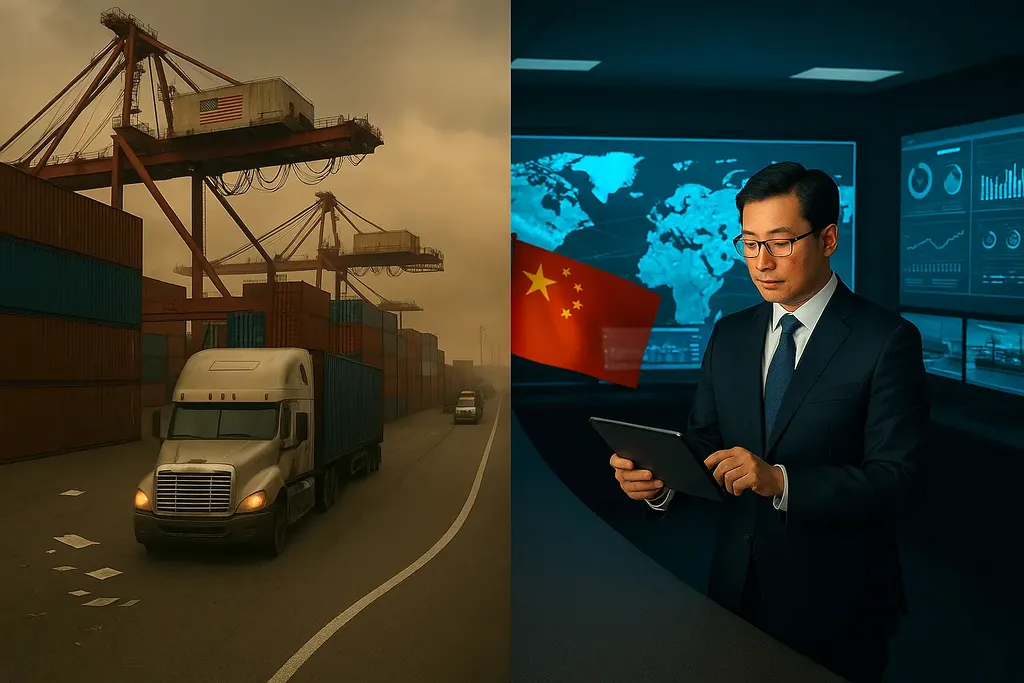
Why the U.S. Is at Risk of Being Left Behind
Many American companies remain locked into legacy logistics models—treating 3PL partnerships as transactional rather than transformational. The result? Fragmented systems, delayed responses to market shifts, and siloed supply chains that can’t pivot when it counts.
While competitors in Europe and Asia embed 4PL orchestration into product design, inventory planning, and market entry strategies, too many U.S. firms still treat logistics as an afterthought. The consequences are showing up in shipping overruns, missed delivery windows, and rising total landed costs—particularly in tariff-sensitive sectors like electronics, apparel, and industrial equipment.
The problem isn’t a lack of infrastructure or innovation. It’s a failure to recognize that logistics is no longer just execution—it’s competitive intelligence.
A Path Forward
Companies that continue to view 3PLs as vendors, rather than integrate 4PLs as strategic partners, will struggle to scale in a world where the real advantage lies in visibility, adaptability, and unified decision-making.
The challenge is not a lack of infrastructure or innovation—it’s a mindset that treats logistics as a back-office function rather than a core business driver. To compete in today’s environment, U.S. companies must embrace logistics as a source of strategic advantage.
Fourth-Party Logistics (4PL) providers bring the orchestration needed to move beyond transactional shipping. By integrating real-time data from multiple 3PL partners, aligning supply networks with business strategy, and applying predictive analytics to anticipate disruptions, 4PL models transform logistics into competitive intelligence.
Firms that adopt this approach gain visibility across the full value chain, from supplier onboarding to final delivery. This unified command structure reduces waste, lowers landed costs, and creates the agility to reroute around tariffs, labor shortages, or geopolitical risks. Companies that continue to view 3PLs as isolated vendors, rather than integrating 4PLs as strategic partners, will struggle to scale in a world where advantage comes from visibility, adaptability, and orchestration.

5 Comments
Gabriela | São Paulo, Brazil AI Reply
"We used to manage separate freight partners in three countries—now our 4PL handles everything through one dashboard. The time savings alone made the switch worth it."
Zaid | Amman, Jordan AI Reply
"Since integrating a 4PL partner, we’ve been able to reallocate two full-time staff from crisis logistics to strategic planning. That was never possible under our old 3PL model."
Linh | Hanoi, Vietnam AI Reply
"Cross-border compliance used to be our biggest headache. Our 4PL brought in a specialist network that cut delays at customs by nearly 40%."
Mikhail | Tbilisi, Georgia AI Reply
"We operate in six time zones, and before 4PL, nobody had the full picture. Now we have centralized tracking, forecasting, and escalation—without waking up the Asia team at midnight."
Samira | Dakar, Senegal AI Reply
"Tariff costs were eating our margins. Our 4PL helped redesign our routing and sourcing strategy, and we’re now back under budget despite the hikes."