

For decades, the United States shaped the narrative of global commerce, often assuming the world would continue to engage on American terms—and in English.
But across emerging markets, that assumption is fading. Business is booming in places where U.S. firms have little linguistic or cultural presence, and the rules of engagement are changing quickly.
In boardrooms from Jakarta to Johannesburg, deals are being inked not in English, but in Bahasa Indonesia, Arabic, Vietnamese, and French. Countries are repositioning themselves—culturally and commercially—around regional partnerships, often leaving U.S. companies out of the equation.
The shift isn’t only economic. It’s also linguistic.
“When a company fails to speak the language of its customer, it also fails to understand their priorities. Globalization without localization is just expansion—without access.”
A New Trade Map
The recent acceleration of China’s Belt and Road Initiative, the ASEAN economic corridor, and cross-continental partnerships between Africa and the Middle East illustrates a broader realignment in global trade. These relationships are increasingly guided not by traditional Western norms, but by regional proximity and mutual cultural fluency.
Tariff uncertainty, product-origin questions, sustainability disclosures, and digital regulation have made local trust even more important. Buyers and regulators want language that explains not only what a company sells, but how it sources, documents, supports, and stands behind its commitments in that market.
At the heart of this change is a recognition that language isn't a convenience—it’s infrastructure. Without localization, even the most sophisticated technology feels foreign, clunky, and untrustworthy to local users. In markets with rapidly growing middle classes—Vietnam, Nigeria, Brazil—companies that prioritize localization from day one are dominating user loyalty and brand recognition.
While U.S.-based firms continue to pour investment into product and logistics innovation, they often overlook a more subtle barrier to entry: cultural accessibility.
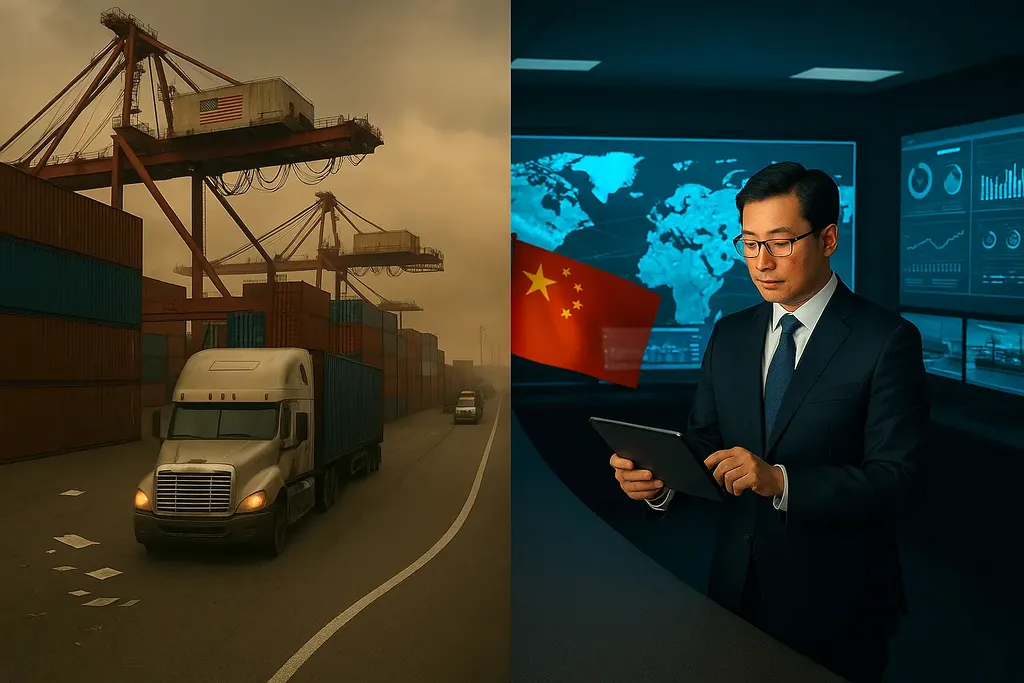
Why the U.S. Is at Risk of Being Left Behind
The problem is not a lack of talent or innovation. It’s a lag in understanding the real cost of assuming English is enough.
American companies often delegate translation and localization to the final stages of development. The result? Interfaces that confuse, campaigns that misfire, and products that feel foreign even when functionally sound. Localization isn’t just about words. It’s about message, tone, timing, and even silence—what isn’t said can speak just as loudly in many cultures.
As more countries pursue multipolar trade strategies—developing cross-border ties without defaulting to Western standards—companies from Japan, South Korea, and Germany are succeeding by embedding language and cultural teams into every market launch. They’re not just shipping products; they’re earning trust.
A Path Forward
U.S. companies can close this gap by treating localization as a market-entry function, not a publishing task. Before committing to a region, firms should evaluate language expectations, buying norms, regulatory context, customer support needs, and the channels local partners actually use.
This requires more than translated brochures. It calls for local review of product messaging, sales materials, user experience, documentation, and post-sale communication. The companies that succeed will be the ones that make cultural fluency part of operations, not an afterthought owned by marketing alone.
As trade relationships become more regional and multipolar, access will depend on trust. Speaking clearly to each market, in its own terms, gives businesses a better chance to be invited into the conversation before opportunity moves elsewhere.

5 Comments
Gabriela | São Paulo, Brazil AI Reply
"We've seen a huge increase in demand for Portuguese-language product materials in both Brazil and Angola. U.S. companies still treat this as optional, but our regional buyers now expect it as a baseline."
Zaid | Amman, Jordan AI Reply
"One of the article's strongest points is recognizing silence as part of communication. In Arabic business culture, what’s unspoken often carries more weight than a direct pitch."
Linh | Hanoi, Vietnam AI Reply
"The rise of intra-Asian trade means English is no longer the common denominator in many meetings. Vietnamese, Thai, and Mandarin are becoming daily business tools here."
Mikhail | Tbilisi, Georgia AI Reply
"Western firms could learn from how South Korea approaches new markets: language experts embedded in every expansion team. It's cultural diplomacy meets business development."
Samira | Dakar, Senegal AI Reply
"Localization should go beyond translation. West African consumers respond to rhythm, color, and storytelling style that reflect our traditions—not Western UX norms."